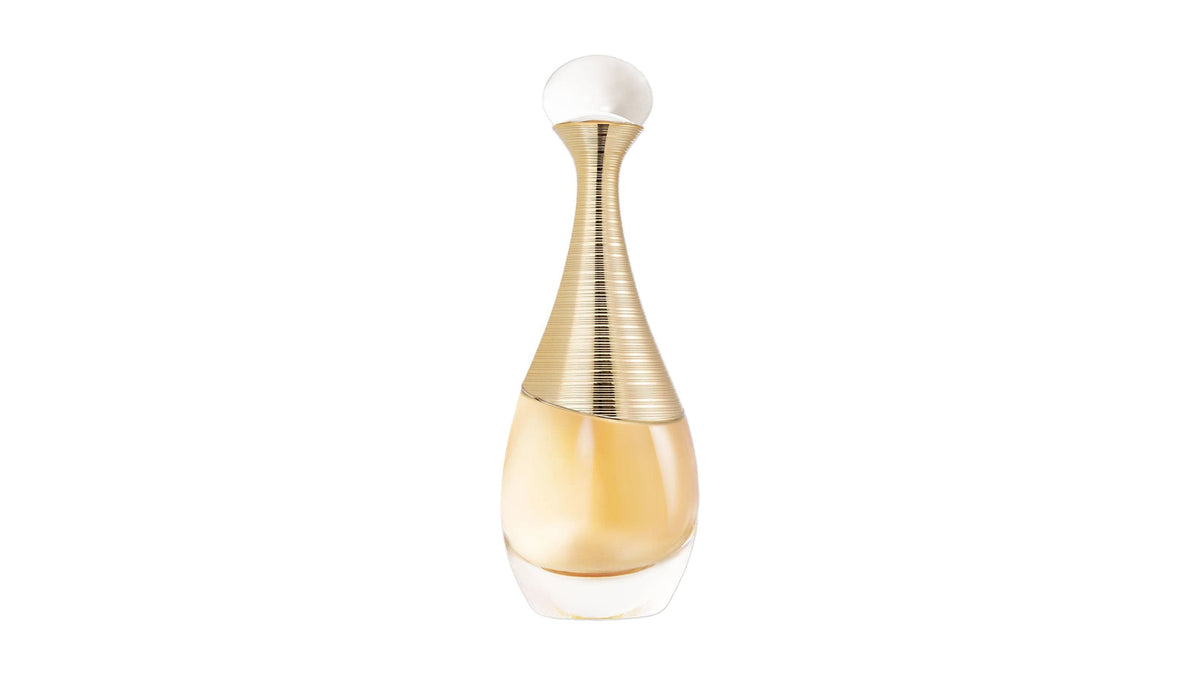
You see “Eau de Parfum” written on almost every perfume bottle and on the label of many decants, but the term itself says nothing about the scent; it describes the concentration. Eau de parfum, abbreviated to EDP, indicates how much concentrated perfume oil has been dissolved in alcohol, somewhere between a more diluted eau de toilette and an extrait or perfume, the most concentrated of all. Reference sources converge on an approximate range of 15–20% perfume oil for EDP, but each house uses different proportions, and the exact percentage rarely appears on the retail label. In practice, this means an eau de parfum tends to be more intense and last longer on the skin than the eau de toilette version of the same composition, although this relationship does not hold for every EDP/EDT pair on the market.
- EDP describes a concentration level of perfume oil, not a separate olfactory composition—the same formula can exist at the same house as an EDT, an EDP, and sometimes an extrait.
- The approximate range cited by several independent sources is 15–20% perfume oil, diluted in alcohol.
- Percentages are not a strict legal standard, so an eau de toilette from one house may in fact be more concentrated than an eau de parfum from another.
- A higher concentration generally means a more intense scent and longer-lasting wear, but not a fixed number of hours on the skin.
What eau de parfum actually means
The term describes one step on a broader concentration scale, which starts with eau de cologne, moves through eau de toilette and eau de parfum, and ends with extrait or perfume, the most concentrated. Each step contains a different percentage of perfume oil dissolved in alcohol, with the remainder consisting mostly of alcohol and water. Two bottles can carry the same olfactory composition, with the same notes listed by the house, and still be sold separately as eau de toilette and eau de parfum because the formula has been diluted differently. A house may even sell several concentration versions under related names, for example, the base name and an “Intense” version, without that necessarily meaning a completely different composition: the difference often comes down to how much perfume oil was used and how the core accord was constructed.
How much perfume oil does an EDP actually contain?
On this point, independent sources agree on similar figures. The perfume article on Wikipedia describes eau de parfum as a concentration level with a typical range of 15–20%, usually cited at around 15%, positioned between eau de toilette (5–15%) and perfume or extrait (15–30%, with IFRA citing around 20%) (source: Wikipedia, the perfume article). An independent British guide gives similar ranges: eau de cologne 2–5%, eau de toilette 5–15%, eau de parfum 15–20%, extrait or perfume 20–40% or more, with longevity increasing as you move up the scale (source: Frugal Family). An educational page about perfumery describes EDP as containing around 15–20% aromatic extracts diluted in alcohol, with variations from one manufacturer to another, and places extrait at generally twice the concentration of an EDP (source: Typology). None of these sources cites a legally binding standard for the percentages: the convention developed within the industry, rather than through strict regulation, which explains the variation you see from one house to another.
A quick comparison with eau de toilette and extrait
If you remember just one rule, remember the order, not the exact percentages: eau de cologne, then eau de toilette, then eau de parfum, then extrait or perfume, with the concentration increasing at each step. For a more detailed comparison between EDP and eau de toilette, looking at their character and the situations each suits, there is a dedicated article, eau de toilette explained in detail. For extrait, with its own application advice and recommendations, see the guide to perfume extrait.
How concentration affects intensity and how long it lasts on the skin
A higher concentration of perfume oil generally means you notice the composition more strongly when you apply it and the scent remains perceptible for longer. That explains why eau de parfum is usually the recommended option for someone who wants a more noticeable presence without reapplying every two hours. However, the percentage of perfume oil is just one of the factors that determine how long a perfume lasts on the skin: the olfactory composition itself matters just as much, because certain raw materials, such as resins, woods, or musks, naturally last longer than citrus or green notes, regardless of concentration. Each person’s skin, its level of hydration, and the temperature and humidity that day also affect how strongly and how quickly a perfume can be smelled.
Why two EDPs can last differently on the skin
Two people who apply the same eau de parfum from the same bottle can have different experiences, and that does not mean one of them received a lower-quality perfume. Dry skin retains less perfume than well-hydrated skin, and a warm day speeds up the evaporation of top notes. That is why an eau de parfum from one house can last less time on your skin than an eau de toilette from another house: the higher concentration and the “EDP” label remain approximate indicators, not a guaranteed identical result for everyone. If you want to understand the terms used to describe this behaviour in more detail—sillage, projection, and longevity—there is a separate article, sillage, projection, longevity: what each term means.
Where EDP sits between eau de toilette and extrait
In short, eau de toilette is, approximately, more diluted and lighter on the skin, which is why many people choose it for daytime wear or as a first introduction to a new composition. Extrait, also called perfume, is the most concentrated point on the scale: you need less liquid with each application, making it economical to use, but it generally costs more per millilitre than an eau de parfum from the same range. For many people, eau de parfum remains the middle ground between the two: noticeable enough to be smelled from a distance, but without the per-millilitre cost of an extrait. If you are choosing between EDP and EDT for a particular perfume, or want details about how to apply an extrait and who it suits, the dedicated articles cover exactly that.
EDPs from our range to try as a decant before buying the full bottle
The surest way to find out how an eau de parfum actually feels on your skin is to wear it for a few days in a row, not read about it. Prada Paradoxe, an amber floral eau de parfum in our range, opens with neroli buds, pear, and bergamot, moves into orange blossom and jasmine, and settles on a base of amber, Bourbon vanilla, musk, and benzoin, according to the store description. It is the kind of composition where the eau de parfum concentration really comes through, because the base notes have time to develop on the skin over the course of a full day, not just during the first few hours.

A 2–3 ml decant of Paradoxe gives you exactly the space you need for this: enough perfume to wear to the office, then in the evening, then on the third day, and observe for yourself how the concentration develops on your skin, without committing to a full bottle. If you prefer a different composition, also an eau de parfum, YSL Libre is another example from our range with its own article, where you can find the notes and full olfactory context. To see how many applications you get from a decant of each size, the size guide shows the equivalents for 2, 3, 5, and 10 ml. And if you are wondering where decants come from and how they are poured from original bottles, the how it works page explains the process step by step.
Beyond Paradoxe, in the Designer perfumes collection you’ll find other eau de parfums you can try in the same way, as a decant, before deciding which one is worth buying as a full bottle.
Frequently asked questions about eau de parfum
What does the abbreviation EDP mean? EDP stands for “eau de parfum” and indicates the concentration level of perfume oil in a bottle, approximately 15–20%, diluted in alcohol. It does not mean a separate type of scent or guarantee higher quality than eau de toilette.
Why can an EDP feel weaker on the skin than an EDT from another house? Because the percentages are not a strict legal standard and each house uses different proportions; a well-constructed eau de toilette from a house that uses a generous amount of perfume oil can last longer than an eau de parfum diluted towards the lower end of the range.
How long does an eau de parfum actually last on the skin? There is no fixed number of hours that applies to all EDPs: the olfactory composition, skin type, and conditions that day matter just as much as the percentage of perfume oil. The surest way to find out exactly how long it lasts on you is still to wear it for a few days, ideally from a small decant.