When you’re looking for “luxury” perfumes for men, it’s easy to judge by the name of the house or how expensive the bottle looks, without considering what’s actually inside it. Luxury is first and foremost about the materials: richer concentrations, more expensive ingredients, and a house with a distinctive style—not a guarantee that you’ll like a perfume just because it’s expensive. This article profiles seven men’s or unisex perfumes with a clear luxury identity, through their actual notes, so you can recognize the type of scent you’re buying before deciding on a full bottle.
- Creed Aventus — smoky pineapple and birch, the easiest of the seven to recognize.
- Le Labo Santal 33 — dry sandalwood, built on reputation more than advertising.
- Marc-Antoine Barrois Ganymede — a mineral, almost metallic profile, with no sweet notes.
- By Kilian Angels' Share — a cognac note for cooler evenings.
- Maison Francis Kurkdjian Baccarat Rouge 540 — the most popular niche perfume on the list.
- Xerjoff 1861 Naxos — honey and tobacco, warm without being childish.
- Tom Ford Ombré Leather — smoky leather for winter evenings.
What does a luxury perfume for men actually mean?
A niche perfume usually comes from an independent house with small-scale production and expensive raw materials, created for an audience looking for a particular olfactory note rather than a mass-market hit. A designer perfume, by contrast, is made by a major fashion house or cosmetics group, with large-scale production and sustained marketing; it isn’t automatically “weaker,” but it follows different rules for budgets and distribution. If you want to compare more options beyond these seven, you can see the rest in our Niche perfumes collection.
Concentration also affects the price: an Extrait de Parfum generally contains more fragrance concentrate than an Eau de Parfum, which partly explains why some bottles cost more than others in the same range or from the same house. None of this tells you whether the perfume suits your skin or whether its style matches what you usually wear. That’s why it’s worth wearing a 2–3 ml decant for a few days in real-life situations before spending on a full bottle of luxury perfume—the way we pour and seal our decants is explained separately, if you’d also like details about the bottles and batch code.
Creed Aventus — smoky pineapple, birch, and a base that makes it easy to recognize

The notes listed by the house for Aventus are pineapple, bergamot, blackcurrant, and apple in the opening; smoky birch, patchouli, jasmine, and rose in the heart; and musk, oakmoss, ambergris, and vanilla in the base. It’s a fruity chypre Eau de Parfum, launched in 2010 by Olivier and Erwin Creed, and it remains the perfume for which the Creed house is best known today.
The combination of sweet fruit and birch smoke makes it what’s informally called a “power fragrance”: it can be noticed from a distance and stays in the olfactory memory of those around you. That’s why it works better for events or evenings out, when you want to be noticed, than for an ordinary day at the office, when you’d prefer something more discreet.
Le Labo Santal 33 — dry sandalwood and a reputation built without traditional advertising

Santal 33 is built around sandalwood, leather, papyrus, Virginia cedar, cardamom, violet, iris, and amber. It was launched in 2011 by perfumer Frank Voelkl and belongs to the woody-aromatic family. Le Labo didn’t rely on traditional image campaigns, but on the fact that people began wearing and recommending the perfume to one another, building its current reputation more than any advertisement could.
It’s unisex by design: the sandalwood is dry, almost powdery, not sweet or gourmand like it is in many commercial perfumes with “sandalwood” in their name, while the leather in the heart gives it a subtle edge. If you’ve tried another sandalwood perfume and found it a little sweet, Santal 33 is the opposite point of comparison.
Marc-Antoine Barrois Ganymede — mineral leather, almost metallic

Ganymede opens with saffron and Italian mandarin, continues with Chinese osmanthus, immortelle (immortelle), and violet leaf, then settles into mineral notes, suede, akigalawood, musk, cedar, and patchouli. It’s a woody-spicy perfume launched in 2019 and created by perfumer Quentin Bisch for the Marc-Antoine Barrois fashion house.
What sets it apart from the rest of the list is precisely the absence of sweetness: the mineral note listed by the house comes across almost like cold metal or wet stone, not warm, smoky leather. It’s the right choice if you want a niche perfume with a clear identity but without the gourmand or vanilla notes found in most of the other profiles on this list.
By Kilian Angels' Share — a cognac note for cooler evenings

Angels' Share opens with cognac, moves into a heart of cinnamon, tonka bean, oak, and Hedione, and finishes with vanilla, praline, sandalwood, and caramelized almond. It’s an oriental-vanilla perfume launched in 2020 and created by perfumer Benoît Lapouza; the name directly references the family heritage of Kilian Hennessy, heir to the Hennessy cognac house.
Its warmth comes more from the combination of oak wood and sweet, caramelized notes than from a classic oriental note of incense or resin, making it suitable for autumn and winter evenings when you want something dense on your skin. On a hot summer day, it risks feeling too heavy for everyday wear.
Maison Francis Kurkdjian Baccarat Rouge 540 — the perfume you recognize from the first sniff

Baccarat Rouge 540 opens with saffron and jasmine, continues with amberwood, ambergris, and Hedione, and settles into fir resin, cedar, sugar, ambroxan, and oakmoss. It’s an oriental-floral perfume launched in 2015 by Francis Kurkdjian and remains probably the easiest niche perfume of the past ten years to identify—many people recognize it on the street even if they don’t know its name.
Its popularity doesn’t diminish its status as an expensive, well-made niche perfume; it only means you’re more likely to come across someone who already wears it. If longevity on the skin is your main criterion, rather than recognizability, our guide to long-lasting men’s perfumes goes into more detail on the subject.
Xerjoff 1861 Naxos — honey, tobacco, and vanilla, without being childish

Naxos opens with lavender, bergamot, and lemon, moves into a heart of honey, cinnamon, cashmeran, and sambac jasmine, then settles into tobacco leaf, vanilla, and tonka bean. It’s a citrus-gourmand perfume launched in 2015, part of the XJ 1861 trilogy that Xerjoff presented at the Esxence fair in Milan to mark the 150th anniversary of the unification of Italy.
Honey and tobacco give it an almost gourmand warmth, but the dry tobacco leaf and cinnamon keep it away from the sweet register of many vanilla-based perfumes. It works especially well in autumn and winter, when a sweet-spicy note feels right for the temperature outside.
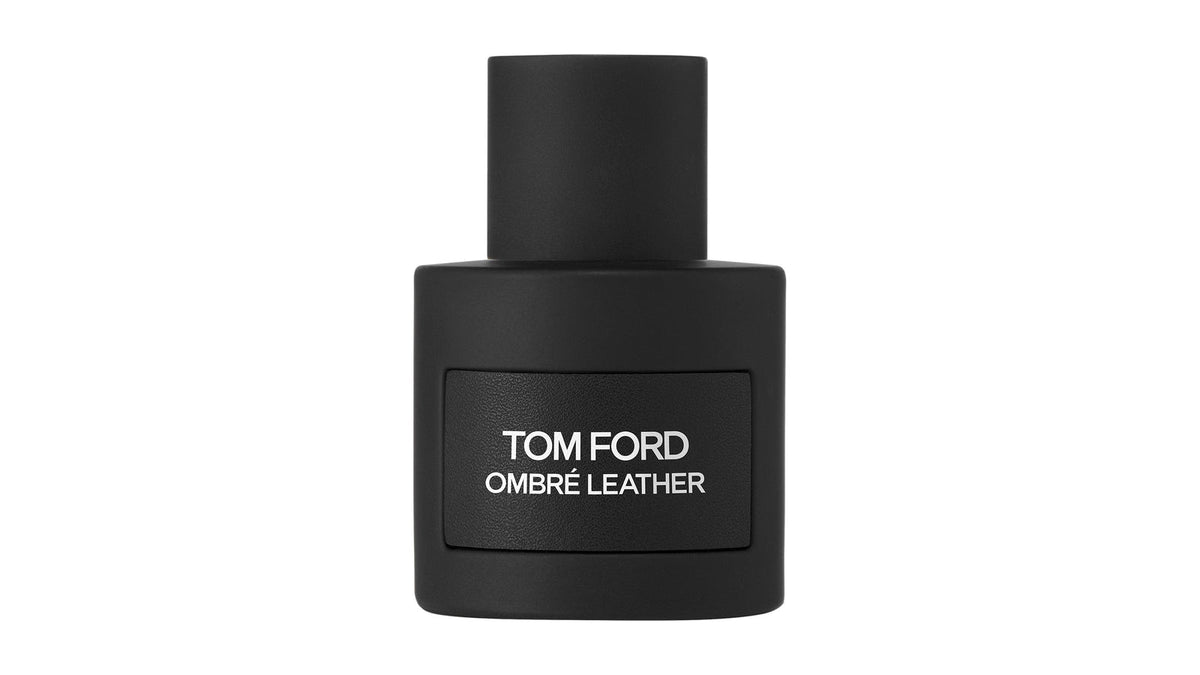
Tom Ford Ombré Leather — smoky leather and an animalic note for the evening

The 2018 version of Ombré Leather opens with cardamom, continues with leather and sambac jasmine, and finishes with amber, moss, and patchouli. It’s a leather-family perfume launched in 2018 and created by perfumer Sonia Constant; the notes above belong to this version, the one discussed here and the one available in our decants.
The smoky leather, supported by a subtle animalic note, clearly places it in the evening category: the kind of perfume you wear for a winter night out, not to the office or for an ordinary afternoon walk.
How to choose among the seven based on the season and occasion
None of the seven is designed for every time of day or every season; each has its place, and here that difference matters more than the price tag.
For cold evenings
Angels' Share, Naxos, and Ombré Leather share a dense warmth—cognac, honey and tobacco, and smoky leather, respectively—that feels especially comfortable in autumn and winter, at evening events or outings where you want a stronger olfactory presence.
For daytime wear
Santal 33 and Ganymede are the drier, woody or mineral options on the list, discreet enough for the office or an ordinary day, without the sweetness or intensity of the other evening profiles.
For a quick first comparison
If you want to compare several dense evening options without buying four full bottles, the Date Night Set for Him brings together small decants of Aventus, Ombré Leather, Dior Homme Intense, and Le Male Le Parfum, specifically for this kind of comparison. And if you’re choosing a luxury perfume for your partner too, our guide to perfume sets for couples explains how to put together a pair of decants that works for both of you.

None of the seven perfumes is objectively “the best”—each expresses the idea of luxury differently: through a hard-to-ignore note, like Aventus; a reputation built without traditional advertising, like Santal 33; or an unusual mineral profile, like Ganymede. Try each on your skin from a decant to see whether its style really matches what you want to wear, not just the name of the house on the bottle. If you’d like to explore other classic and niche perfumes with a special status beyond these, our guide to the best perfumes in the world covers a wider range, for every gender.