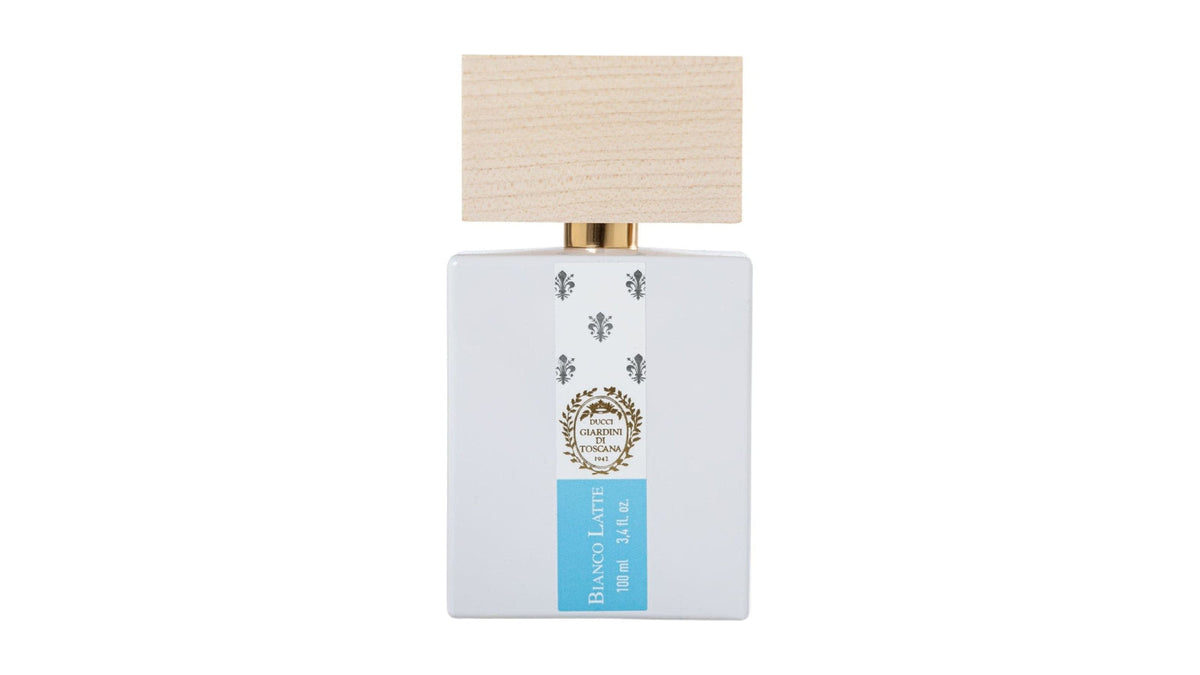
An original perfume is a bottle manufactured by the house that owns the brand, or under its direct license, with its formula and packaging, and placed on the market with that house’s explicit consent. It does not matter how many legitimate hands the bottle has passed through before reaching you, as long as its chain of provenance remains unbroken from the manufacturer to the current seller. A perfume bought from an authorized distributor with an invoice remains original even if you did not buy it directly from the perfume house’s store. The real difference is not where you buy it, but whether there is proof that the bottle comes, without interruption, from a source authorized by the brand.
- An original is defined by the perfume house’s consent, not by the last place you bought it from.
- A tester, a counterfeit and a “dupe” are three different things, with different rules and risks.
- An invoice from an authorized distributor matters more than a batch code or hologram viewed in isolation.
- A decant can be just as original as the full-size bottle it was poured from, if that bottle has documented provenance.
What does “original perfume” actually mean?
An original perfume is one manufactured by the house that owns the brand, with its formula and packaging, and introduced to the market with that house’s consent. Once that bottle has been legally sold, the brand owner can no longer control who resells it: this is the principle of exhaustion of intellectual property rights, under which, after the first authorized sale, the brand owner generally loses the right to decide who resells the product (source: Exhaustion of intellectual property rights, Wikipedia). That is why a bottle can pass through several legitimate sellers, one after another, and remain original at every stage.
This also changes the question worth asking before you buy. “Original” does not necessarily mean “bought directly from the brand or from the perfume house’s store”; it means “comes, without interruption, from a bottle placed on the market by the house that owns the brand”. When the seller can show that chain, from the authorized distributor to you, the question of authenticity is already answered.
Original, tester, counterfeit and “dupe”: four commonly confused terms
These four words are often used interchangeably in listings, even though they describe different things commercially and legally. Distinguishing between them helps you understand exactly what you are being offered, not just what you are being promised.
The tester
A tester is also a product made by the perfume house, intended for trying in a store: it is usually sold without a box or with specific wording on the label. It is not counterfeit, because it comes from the same production as the retail bottle, but it is also not the product sold as a decant by Decant Parfum, which comes from a complete retail bottle with its usual packaging.
The counterfeit
Counterfeiting uses a perfume house’s name and brand without permission to make a product look original, even though it does not come from that house’s production. The real legal line between a counterfeit and a perfume merely “inspired by” another comes down to the brand: brand counterfeiting occurs when a product uses the same brand or one that creates confusion about its origin (source: Trademark, Wikipedia). Some counterfeits go further and use a name slightly altered from the original, close enough to mislead a hurried buyer, but changed in one detail precisely to avoid direct identification.
The “dupe” or “inspired by” perfume
A “dupe” tries to recreate a familiar scent through reverse engineering, a widespread practice in the perfume industry (source: Perfume, Wikipedia), without using the name or brand of the original perfume. Legally, this is not the same issue as counterfeiting, because a scent itself cannot be protected by a registered trademark: its function is to smell a certain way, and that effect cannot be reserved exclusively for one company (source: Perfume, Wikipedia). That does not mean a “dupe” is the original perfume; it only means that recreating the scent without the associated brand is judged by different rules than counterfeiting. Decant Parfum does not sell or recommend these alternatives; the purpose of this discussion is to explain the difference, not to direct you to them.
Why the chain of provenance matters: authorized distributors and invoices
An authorized distributor buys bottles directly from the perfume house or from an importer it has approved, with an invoice. That document is, in practice, the first verifiable link in the chain of provenance: it shows where the goods entered the country and through whom, not just what is written on the label.
Batch codes, holograms and other security features on the packaging help with traceability, but they are not infallible in themselves. Anti-counterfeiting technologies, from serialized barcodes to seals and QR codes, can in turn be reproduced by counterfeit manufacturers, which means that a security feature viewed in isolation does not replace a documented chain from an authorized distributor to the seller (source: Counterfeit consumer goods, Wikipedia).
A decant can be original in exactly the same sense. If the bottle it was poured from entered the country with an invoice from an authorized distributor, the decant retains that provenance, even if the perfume has been transferred into a smaller atomizer, sealed and labeled with an internal batch code. The size of the container does not change the chain of origin for its contents.
What do you risk with a counterfeit perfume?
The risk is not just commercial. Counterfeit cosmetics do not undergo the same safety checks as original products and have been documented as being associated with reactions such as eye infections or skin allergies (source: Counterfeit consumer goods, Wikipedia). The scale of the problem is not specific to the Romanian market, but it gives an idea of its size: in 2016 alone, US customs authorities seized more than 2,000 shipments of counterfeit cosmetics in a single year (source: Counterfeit consumer goods, Wikipedia).
Highly sought-after niche perfumes are among the favorite targets for counterfeiters, precisely because demand often exceeds official supply. A perfume such as Creed Aventus, discussed at length in a separate article, or a rare perfume from the Tom Ford range, such as Ombré Leather, attracts exactly the kind of attention that makes producing a convincing counterfeit worthwhile for its maker. Beyond the risk to your skin, a buyer of a counterfeit generally has no real way to claim compensation or a replacement, because there is no genuine commercial chain behind the product, only the appearance of one.
How to check where the perfume you want to buy comes from
Ask the seller to clearly state where the product comes from: which authorized distributor is behind it and whether they can show an invoice, rather than simply making a generic claim that the perfume “is original”. A vague or evasive answer usually says as much as a clear one.
A price far below the market rate for a rare niche perfume is a signal that warrants further questions, not an automatic reason to reject it; some offers really are genuine, but they are worth checking beforehand, not after you have paid.
For a decant, check whether the seller explains the decanting process and the provenance of the source bottle. Transparency about the process says as much as the label on the atomizer. You can read about how our decants are poured and where we buy the original bottles, with invoices, from authorized distributors.
If what matters, in the end, is that the source bottle is original and documented, you can check exactly that on a smaller scale. The Dior Sauvage decant, an Eau de Toilette with bergamot, pepper and ambroxan, comes from a bottle bought with an invoice from an authorized distributor—the exact chain of provenance described above—and is poured into an amount suitable for trying before you consider a full-size bottle. If you want a higher concentration from the same house, it is also worth reading about what an Eau de Parfum is, as a point of comparison.

The rest of the range, from designer perfumes to All perfumes in the store, follows the same principle: documented provenance, not just a label that promises it.