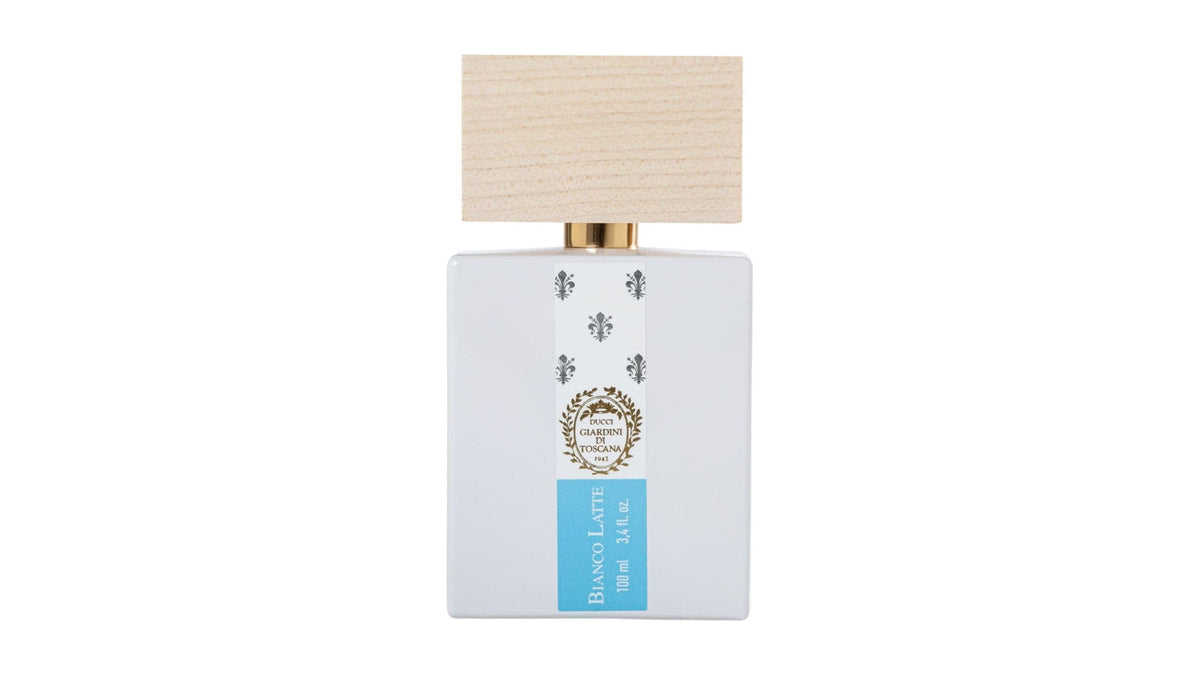
When someone says a perfume is “powdery,” they usually aren’t describing an ingredient actually called that, but a sensation: a velvety warmth reminiscent of a good makeup powder or body cream, more subtle and less sweet than an obvious dessert. The sensation almost always comes from a combination of a few recurring notes — iris, heliotrope, vanilla, white musk and amber or ambroxan — and the proportions determine whether the final result feels austere and powdery or warm and gourmand.
What does a “powdery” perfume actually mean?
The confusion arises because in everyday speech, “powdery” is used to describe the smell of baby powder, classic lipstick and compact makeup powder. In perfumery, the term describes an olfactory texture rather than a specific smell: the composition takes on a fine softness, as if passing through a soft filter, rather than staying raw or sharp. That’s why a powdery perfume can be floral, oriental or gourmand at the same time — the “powdery” label overlaps with the fragrance family; it doesn’t replace it.
A practical guide: if a perfume reminds you more of the inside of a powder compact or the smell of a good body cream than of a ripe fruit or a freshly cut flower, it probably has an important powdery component in its composition.
What creates the powdery sensation?
The powdery sensation doesn’t come from a single ingredient, but from a small group of materials that, when combined, give the skin that velvety texture. The most important are iris, heliotrope, vanilla or vanillin, white musk and amber or ambroxan, each bringing a different nuance to the same underlying sensation.
Iris, the cool, powdery note
Iris, also known as the iris plant, comes from the plant’s rhizome, which is dried and processed for a long time before it can be used in perfumery, making it one of the most expensive ingredients in the field. Its smell is cool, rooty and reminiscent of compact powder, without a trace of sweetness, which is why it often features in austere compositions built around it, rather than appearing only as a secondary accent. Dior Homme Intense, for example, uses iris as a heart note alongside ambrette and pear, over a base of Virginia cedar and vetiver, and “iris” and “powdery” are explicitly listed among its main accords (source: Fragrantica). If you want to explore this note on its own, apart from the powdery context, we’ve written an article dedicated exclusively to iris in perfumes.
Heliotrope, the warm almond note
Heliotrope smells of sweet almonds and a little vanilla, with a distinctive powdery warmth that differs from the coolness of iris. The house of Marc-Antoine Barrois describes the heliotrope in Tilia as the composition’s “warm powder,” where the plant is combined with linden blossom, jasmine sambac and broom at the opening, followed by orange blossom and vetiver at the heart (source: Fragrantica). The result is green-floral and powdery, not sweet and heavy.
Vanilla, musk and amber: the sweet, warm side
Vanilla or vanillin brings the sweet, gourmand side of powdery perfumes, but doesn’t automatically turn the perfume into a dessert — it depends on how much the other notes temper it. White musk cleans up and rounds out the rest of the composition, keeping the powdery effect velvety rather than heavy or dusty, while amber or ambroxan adds warmth and, sometimes, a slightly sweet, resinous touch. Valaya Exclusif by Parfums de Marly brings together exactly this trio among its main accords — almonds, heliotrope, vanilla and ambroxan, alongside white musk (source: Fragrantica). If you want to explore each of these notes separately, we have dedicated articles on vanilla in perfumes, amber and ambroxan and musk.
A useful clarification: the note pyramid declared by the perfume house and the one listed by Fragrantica can differ slightly, because each source builds its own interpretation of the composition. Where the distinction matters, we’ve explicitly noted whether the information comes from the official pyramid or a third-party source.
Austere powdery vs. gourmand powdery
“Powdery” doesn’t describe a single style, but rather a spectrum. At one end are austere compositions built around iris and woods, with nothing sweet to dominate — Dior Homme Intense is a clear example of this direction. At the other end are gourmand powdery perfumes, where vanilla, praline or coconut create an almost edible sensation, as in Vanilla Powder or La Vie Est Belle. Between these two extremes are green-floral options that are less sweet and fresher — Tilia, with linden blossom and heliotrope, falls into this category — and warm oriental options built on vanilla, amber and spices, found in both feminine formulas, such as Valaya Exclusif, and masculine ones, such as Le Male Le Parfum.
The distinction matters when choosing: if you want a subtle powdery effect, close to the skin, an austere powdery perfume is a better fit; if you want a warm, enveloping sensation, a gourmand or oriental powdery perfume goes in the opposite direction.
Six powdery perfumes from the catalog, at a glance
Most of the examples below are part of our niche perfumes collection, where you’ll also find other powdery options if you want to explore further. Here are six starting points, from the most subtly gourmand to the most austere.

According to the house’s description, Matière Première Vanilla Powder combines airy, powdery Madagascar vanilla with heliotrope and coconut, with palo santo for a touch of wood and white musk to clean up the scent, so the result is more like a good body cream than a dessert. It’s unisex, launched in 2023 under the signature of Aurélien Guichard, and is part of the house’s recent niche offering; as it doesn’t yet have a verified third-party page, the details about it come directly from the seller’s description, not an independent source.

Valaya Exclusif (Parfums de Marly, 2025) is a warm feminine powdery perfume, with almonds, mandarin and bergamot at the opening, followed by powdery notes, orange blossom, lily of the valley and lotus at the heart, over a base of ambroxan, vanilla, sandalwood, white musk and heliotrope (source: Fragrantica). It’s a good option if you want a gourmand powdery effect with more oriental structure than a simple touch of vanilla.

Dior Homme Intense (2011, perfumer François Demachy) is at the austere end of the spectrum: lavender at the opening, followed by iris, ambrette and pear at the heart, over Virginia cedar and vetiver, with “iris” and “powdery” among its main accords (source: Fragrantica). It’s a good reference if you want to understand what powdery smells like without any dominant sweetness.

La Vie Est Belle (Lancôme, 2012) is probably the best-known reference for feminine gourmand powdery perfumes: blackcurrant and pear at the opening, iris, jasmine and orange blossom at the heart, and praline, vanilla, patchouli and tonka bean at the base, officially described as a warm, gourmand and powdery combination (source: Fragrantica).

Tilia (Marc-Antoine Barrois, 2024, perfumer Quentin Bisch) takes a different direction: linden blossom, jasmine sambac and broom at the opening, followed by orange blossom, heliotrope and vetiver at the heart, over ambrofix and georgywood — a green-floral powdery perfume, less sweet than the other examples here, and unisex (source: Fragrantica).

Le Male Le Parfum (Jean Paul Gaultier, 2020, perfumers Quentin Bisch and Natalie Gracia-Cetto) is the masculine oriental option: cardamom at the opening, lavender and iris at the heart, then vanilla and woody notes at the base, with “powdery” among its main accords, alongside vanilla and iris (source: Fragrantica).
Why it’s worth trying powdery perfumes as a decant first
Powdery is a subtle note that is noticeable up close and has little projection compared with a strong oriental or an intense floral, which means that how it behaves on your own skin matters more than with other fragrance families. Skin chemistry, body temperature and even the weather change its intensity, so two people can experience the same powdery perfume quite differently.
A 2 or 3 ml decant will last for a few consecutive wears, enough for you to notice how the powdery note develops over the course of a full day before deciding on a full bottle. If you have sensitive skin, test it on a small area first, because perfumes contain alcohol and declared allergens that can irritate certain skin types.